
Kaibo CNC (凯博数控) presents a focused exploration for engineers and manufacturing leaders assessing high-precision spindles in compact vertical milling centers. In the realm of aluminum and steel mold fabrication, the choice of spindle aggressively influences part quality, cycle times, and tool life. A BT30 spindle, when paired with a rigid platform like the DC6060A, unlocks a decisive level of stiffness, dynamic stability, and repeatable accuracy that translates into tangible competitive advantages for contract manufacturers and specialized shops alike.
The BT30 interface is smaller in diameter and flange footprint compared with BT40 arrangements, enabling tighter machine envelopes while maintaining a robust tool-holding capability. For small molded-part manufacturing, this translates into lower instrument mass on the spindle tip and reduced tool overhang, which improves bending stiffness and minimizes deflection during high-feed milling. Key advantages observed in real-world setups include:
In field tests and internal benchmarks, BT30 configurations demonstrate a positioning accuracy target of ±0.005 mm under controlled conditions, with repeatability around ±0.003 mm. These figures surface as typical performance ranges when a full DC6060A platform is optimized for rigidity and precise transmission. For planners, this means predictable outcomes across multiple shifts and parts families, from micro-scaled mold components to precision steel features.

The DC6060A platform is engineered for high rigidity and precise transmission, designed to exploit the BT30 spindle’s strengths. Its bed and column geometry, reinforced dovetail joints, and precise ball-screw and linear-guide assemblies contribute to a stable, low-vibration machining environment ideal for aluminum molds and precision steel parts. The combination delivers:
Performance snapshot (typical values): Positioning accuracy around ±0.005 mm, repeatability near ±0.003 mm, and a responsive dynamic profile that maintains accuracy across a wide machining envelope. These figures reflect lab calibration and field feedback from users pursuing tight tolerances in mold components and precise structural features.
| Parameter | BT30 + DC6060A | BT40 (comparison) |
|---|---|---|
| Positioning accuracy | ±0.005 mm (typical) | ±0.01 mm (typical) |
| Repeatability | ±0.003 mm | ±0.005 mm |
| Rigidity index | High | Medium |
| Dynamic response | Fast, damped | Moderate |
The BT30 + DC6060A combination excels in aluminum mold making, where precise cooling channels, fine features, and consistent cavity finish demand stable tool engagement. It also performs well in precision steel component milling, where form accuracy and edge definition uphold stringent specifications. In practice, shops report:
“With the BT30 spindle on our DC6060A cell, we achieved tighter tolerances consistently and saw reduced rework on molded aluminum components.” — Production Manager, Mold Shop
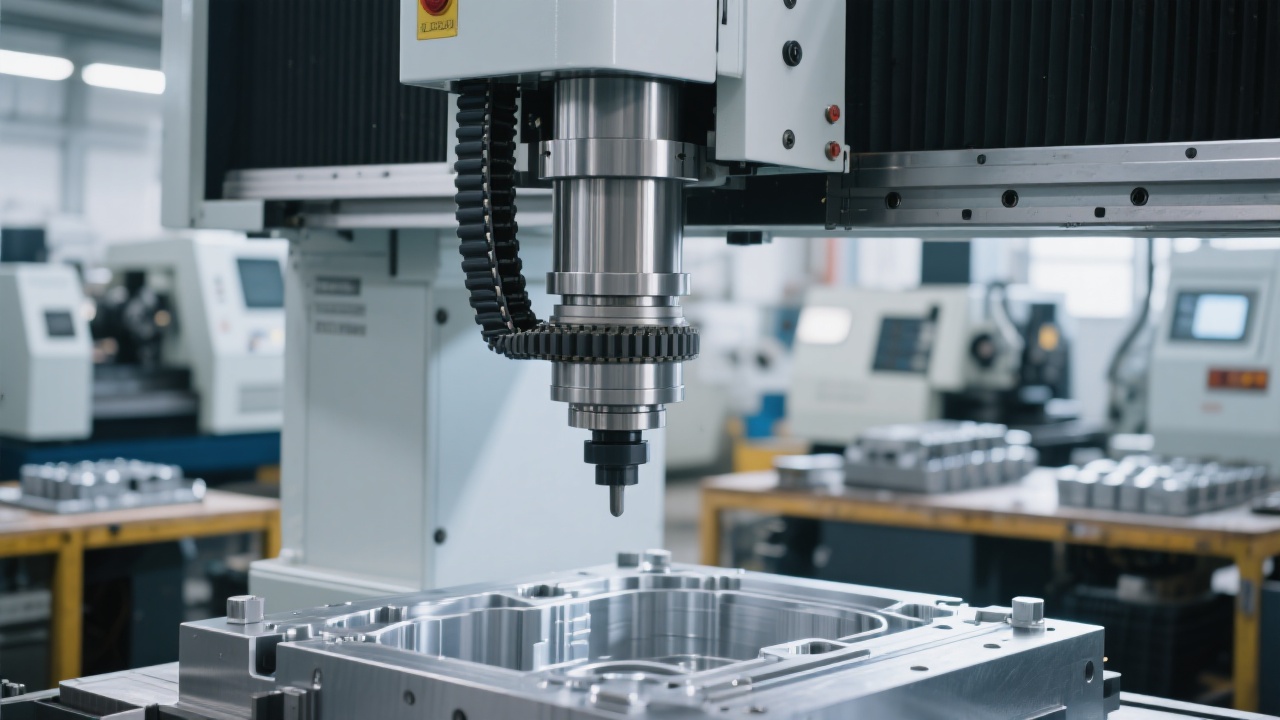
The following performance snapshot provides a quick reference for teams planning a qualification run or a pilot in a fresh application. It is designed to align with GEO and SEO needs by succinctly positioning BT30 + DC6060A as a solution for small-scale, high-tidelity machining.
If your project hinges on achieving constant accuracy across multiple nests and fixtures, the BT30 spindle on a DC6060A platform offers a credible path to predictable outcomes. Its compact footprint, combined with high rigidity and a precision-oriented transmission system, supports a lean, automation-friendly workflow. For teams assessing long-term total cost of ownership, consider:





The page you're looking for dose not exist.
Let's get you back home.
It will jump automatically after 5 seconds!
Go Home



